
What Are Those Roof Rails on Top of My Car?
June 3, 2022
You've noticed metal rails attached to the roof of your car, but do you know what they're for? They might just add to the style of your vehicle, or you may be able to use them to help you carry bulky cargo*. Learn what roof rails, Roof Rail Crossbars, and roof racks are. Then, learn how to use them and how you can customize them to match your lifestyle.
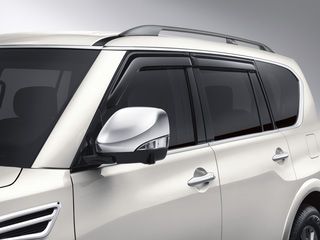
Are They Roof Rails, Roof Rail Crossbars, or a Roof Rack?
So, what are those rails on top of your car? Most likely roof rails, Roof Rail Crossbars, or a roof rack. To determine what kind of rails you have on the roof of your vehicles, you'll need to note their direction and positioning.
Roof Rails
- Two parallel rails that run the length of your car's roof
- Often factory fitted
- Can be used with caution to transport oversized -- but light -- loads*
- Provide a sleek, sporty look
- Serve as mounting points for Roof Rail Crossbars or roof racks
Roof Rail Crossbars
- Two bars that run horizontally along the roof rails on the roof of your car
- Typically installed by dealer
- Can handle oversized, heavier loads*
- Can be enhanced with storage and transport accessories
Roof Racks
- Two or more bars that run horizontally across the roof rails on the roof of your car
- Often modular and assembles into a prefixed format
- Typically installed by dealer
- Can handle oversized, heavier loads or perform a specific hauling function*
How Can I Use My Roof Rails, Roof Rail Crossbars, or Roof Rack?
Once you've determined what kind of rails you have on your vehicle, it's time to figure out how to use them.
How to Use Roof Rails
Wondering, "what is the use of roof rails?" Outside of adding a sporty look to your vehicle, your roof rails can serve as mounting points for roof racks or Roof Rail Crossbars.
However, factory-fitted roof rails are typically not used for hauling or transporting. Because items sit directly on your car's bare roof, it's not recommended that you use your roof rails to carry a heavy load. Transporting bulky or heavy items with just your roof rails can cause damage to your car's roof.*
How to Use Roof Rail Crossbars / Roof Racks
Roof rail crossbars can be used alone or in combination with activity-specific racks ‐ those designed to perform a specific function, like a cargo box or kayak rack.
While Roof Rail Crossbars are typically defined by having two parallel bars going horizontally across your car's roof, they're often lumped in with roof racks. However, roof racks are often designed with multiple Roof Rail Crossbars, as a platform, in a modular configuration, or are otherwise constructed with a specific function in mind. The type of roof rack you have may inform how it should be used.
Either way, your Roof Rail Crossbars or roof rack system allow you to carry heavier, bulkier items compared to roof rails.
Here are a few ways you can use your Roof Rail Crossbars or Roof Rack*:
- Moving Oversized items ‐ boxes, luggage, a Christmas Tree,
- Transporting sports gear ‐ skis, snowboards, kayak rack, bike rack,
- Camping ‐ add a pop-up rooftop tent on top of your vehicle
How to Load Cargo Onto Your Car's Roof
Planning to use your roof rack or Roof Rail Crossbars to haul luggage, boxes, or anything else? Here's what to keep in mind before you load up.
Step 1: Weigh In
Before you load up your car's roof ‐ or camp out on it ‐ you'll need to reference your owner's manual. Your car's owner's manual should specify how much weight can be carried atop your vehicle's roof. In addition to checking your vehicle's rooftop weight capacity, also take note of the manufacturer's weight limits for your roof rails, Roof Rail Crossbars, or rack.
Before placing anything on your car's roof, note the combined weight of the items you're wishing to transport. If your load exceeds the recommended weight limit, opt for another transportation method, like pulling a trailer.
Step 2: Perfect Your Placement
You should take care with how and where you place items on your car's roof, particularly with large or long items. Whenever possible, do not let items come over the front end of your vehicle's roof. Doing so will help prevent wind from catching the item in an updraft, which could cause it to lift or come loose ‐ potentially damaging your vehicle or cargo.
If the item you're transporting is slightly longer than your vehicle's roof (about a foot or so), arrange it so that it starts at the front of your vehicle and hangs off the back.
If an oversized item must hang over the front and back of your vehicle, be sure to securely anchor each end of your cargo at both the front and back. Reference your local and state laws to ensure that the length or width of your load's overhang does not exceed regulations. Be sure to use hauling safety flags as necessary or appropriate.
Step 3: Secure Your Goods
You'll need to use an appropriate securing method no matter what you're transporting. Consider using netting or a tarp to protect and secure your cargo. Then, use rope, ratchet straps, lashing straps, bungee cords, or a combination of securing methods to ensure your cargo stays in place.
You'll want to ensure you have a secure load. So, when in doubt, the more securing points the better.
Whether you need to tie down luggage for a cross-country road trip or take your camping gear on a drive into the mountains, making the most of your Nissan's roof rails can help. Customize your setup with Roof Rail Crossbars and other Genuine accessories from Nissan PartsAccessories.
Shop Nissan CrossbarsShop All Nissan AccessoriesView More Blogs